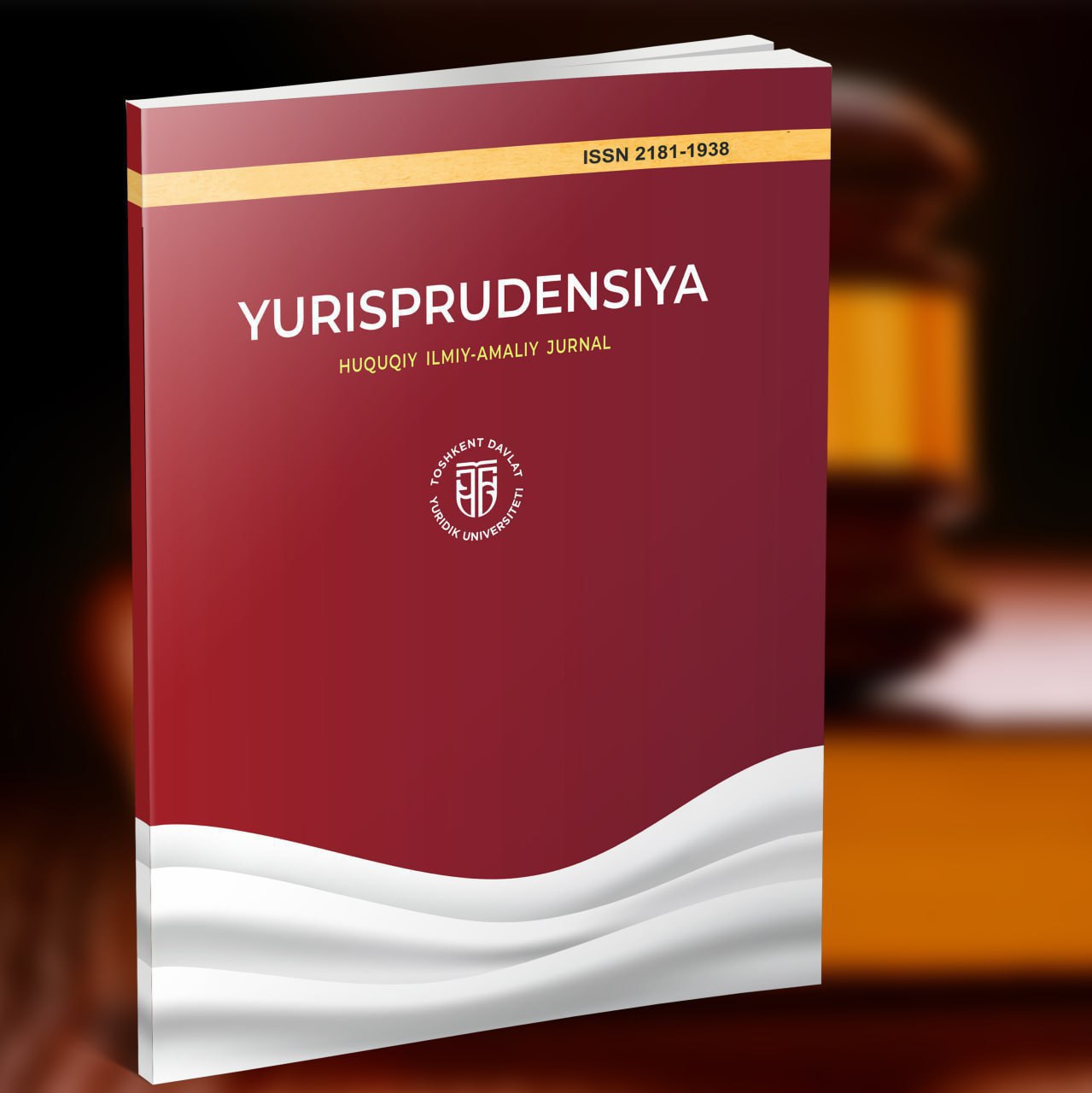
КОНСТИТУЦИОННО-ПРАВОВОЙ СТАТУС ПРЕМЬЕР-МИНИСТРА РЕСПУБЛИКИ УЗБЕКИСТАН
Ключевые слова:
Премьер-министр, исполнительная власть, Конституционный закон, Кабинет МинистровАннотация
В данной статье представлены результаты поэтапных реформ в системе государственной власти по усилению прав и полномочий исполнительной власти, правительства, являющегося ее ядром, а также ответственности Премьер-министра, с учетом того, что по итогам проведенного в нашей стране 27 января 2002 года референдума 24 апреля 2003 года был принят Закон Республики Узбекистан “О внесении изменений и дополнений в Конституцию Республики Узбекистан», также принят 10 декабря 2019 года Закон «О Кабинете Министров Республики Узбекистан» в новой редакции, который вывел на новый уровень реформы в деятельности правительства по повышению правового статуса и одновременно ответственности Премьер-министра. Также отмечено, что в результате осуществленных реформ в систему исполнительной власти страны был внесен ряд изменений, в том числе упразднена должность Председателя Кабинета Министров, введена норма о персональной ответственности Премьер-министра за руководство Кабинетом Министров и его деятельность, а также при внесении на рассмотрение кандидатуры Премьер-министра внедрен институт консультаций, усилена контроль за деятельностью правительства. Введение институтов парламентского контроля, в том числе института вотума недоверия, а главное, значительное повышение авторитета премьер-министра в деятельности Кабинета министров были освещены анализом действующего законодательства. Вместе с тем кратко излагаются мнения национальных и зарубежных ученых-правоведов, исследовавших деятельность исполнительной власти и правительства, а также самого правительства и их руководителей в развитых зарубежных странах.
Библиографические ссылки
1. Husanov O.T. O‘zbekiston Respublikasining davlat hokimiyati vakillik va ijroiya hokimiyati organlari [Representative and executive bodies of state power of the Republic of Uzbekistan]. Tashkent, Universitet, 1994.
2. Rahmonov A.E. O‘zbekiston Respublikasi Vazirlar Mahkamasining konstitutsiyaviy – huquqiy maqomi [Constitutional and legal status of the Cabinet of Ministers of the Republic of Uzbekistan]. Yurid. fan. nomz. diss. Tashkent, 2008.
3. Xoshimxonov A.M. O‘zbekiston Respublikasi Vazirlar Mahkamasining huquq ijodkorlik faoliyati: nazariya va amaliyot masalalari. [Law-making activity of the Cabinet of Ministers of the Republic of Uzbekistan: issues of theory and practice]Yurid. fan. nomz. diss. – Toshkent, 2008.
4. Axmedshayeva M.A. Davlat hokimiyati tizimida ijro hokimiyati [Executive power in the system of state power]. Yurid. fan. dokt. diss. Tashkent, 2010.
5. Wilson J.Q., Dilulio J.J.Jr. American Government: Institutions and Politics. Lexington, 1995.
6. Praymak D.Y. Konstitutsionno – pravovoy status Predsedatelya Pravitelstva Rossiyskiy Federatsii. [Constitutional and legal status of the Chairman of the Government of the Russian Federation] Diss. kand. yurid. nauk. Krasnodar, 2008.
7. Vasilenko I.A. Administrativno – gosudarstvennoe upravlenie v stranax Zapada: SShA, Velikobritaniya, Fransiya, Germaniya. [Administrative and public administration in Western countries: USA, Great Britain, France, Germany]. Moscow, Logos, 2001.
8. Arutyunyan A. Institut Prezidenta v postsovetskix respublikax: konstitutsiya i politicheskaya realnost [sravnitelno – pravovoy analiz]. [Institute of the President in the Post-Soviet Republics: Constitution and Political Reality Comparative Legal Analysis]. Yerevan, Petakan tsarayutyun, 2006.
9. Pronkin S.V., Petrunina O.Y. Gosudarstvennoe upravlenie zarubejnix stran [State administration of foreign countries]. Moscow, KDU, 2011.
10. Simonashvili L.R. Respublika so smeshannoy formoy pravleniya. [Republic with a mixed form of government]. Moscow, MPSI, 2005.
11. Cherkasov A.I. Glava gosudarstva i pravitelstvo v stranax sovremennogo mira: konstitutsionno – pravovoe regulirovanie i praktika. [Head of state and government in the countries of the modern world: constitutional and legal regulation and practice] Moscow, Ekzamen, 2006.
12. Belskiy K.S. Razdelenie vlastey i otvetstvennost v gosudarstvennom upravlenii. [Separation of powers and responsibility in public administration]. Moscow, 1990.
13. Safinov K.B. Pravitelstva Respubliki Kazaxstan na perexodnom etape. Pod red. Zimanova S.Z. [Government of the Republic of Kazakhstan in transition. Ed. Zimanova S.Z.]. Almati, YURIST, 2002.
14. Aranovskiy K.B. Gosudarstvenniy pravo zarubejnix stran: Uchebnik dlya vuzov. [State Law of Foreign Countries: Textbook for Universities]. Moscow, Izdatelskaya gruppa “ФОРУМ”-“ИНФРА-М”, 1998.
15. Available at: https://constitution.uz/oz/.
16. Odilqoriyev H.T. O‘zbekistonning yangi Konstitutsiyasi va hokimiyatlar taqsimlanishi prinsipi [The new Constitution of Uzbekistan and the principle of separation of powers]. Tashkent, 1993.
17. Karimov I.A. O‘zbekiston: milliy istiqlol, iqtisod, siyosat, mafkura [Uzbekistan: national independence, economy, politics, ideology]. T. 1. Tashkent, O‘zbekiston, 1996.
18. Husanov O.T. Hokimiyat tarmoqlari o‘rtasida mutanosib va barqaror munosabatning huquqiy asoslari. DYI Axborotnomasi [Legal bases of balanced and stable relations between branches of government]. TSUE Bulletin. 2006, № 5.
19. Available at: https://lex.uz/docs/-51255/.
20. Available at: https://lex.uz/docs/-66386/.
21. O‘zbekistonda siyosiy islohotlar jarayoni [The process of political reforms in Uzbekistan]. Tashkent, Akademiya, 2011.
22. Available at: https://lex.uz/docs/-29287/.
23. Available at: https://lex.uz/ru/docs/-4636594/.
24. Available at: https://lex.uz/docs/-1857280/.
25. Available at: https://lex.uz/docs/68727/.