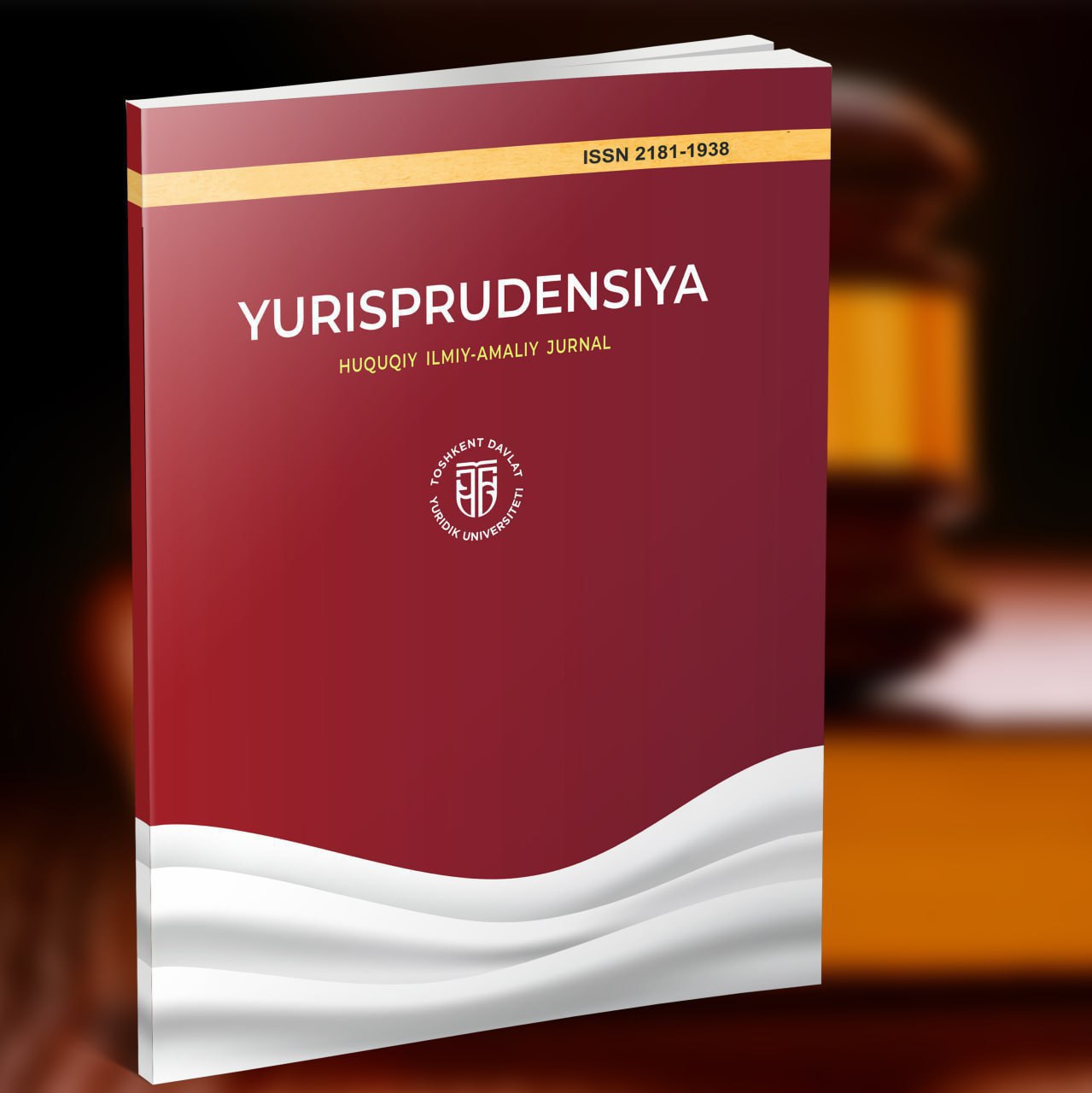
WITHOUT RESOLVING THE ISSUE OF THE GUILT OF THE INDIVIDUAL, THE PROCEDURE FOR TERMINATING A CRIMINAL CASE
Keywords:
crime, accused, question of guilt, criminal case, termination of criminal case, accused, suspectAbstract
In countries with the rule of law, priority is given to the public interest, the main focus is on the fight against crime. At the same time, a conflict in a society in which a crime always occurs, the only socio-legal means of resolving it is criminal justice. Modern criminal procedure policy will be aimed at humanizing legislation, democratizing measures to combat it, and ensuring social justice. In these conditions, it is necessary to reconsider the punitive (repressive) approach to solving the problem of crime. In the world legal practice, it is considered that the policy in this direction is aimed at finding and developing alternative forms of punishment for a crime, as well as for a committed crime, a new crime and the criminal procedural development of interethnic trends. In this regard, drawing attention to the experience of the legislation of the Russian Federation, it should be noted that the institution of liquidation procedure as an alternative legal instrument is one of the main ones. This is due to the fact that the decision to terminate a criminal case is of material and Procedural-legal significance.
References
1. Плошкина Я.М., [Презумпция невиновности и прекращение уголовного дела по нереабилитирующим основаниям по законодательству РФ с учетом опыта ФРГ]. Available at: https://cyberleninka.ru/article/n/prezumptsiya-nevinovnosti-i-prekraschenie-ugolovnogo-dela-po-nereabilitiruyuschim-snovaniyam-po-zakonodatelstvu-rf-s-uchetom-opyta)/.
2. Дабижа Т.Г. Процессуальные гарантии реализации полномочий адвоката–защитника в уголовном судопроизводстве. Журнал российского права. 2012. №7 (187)
3. Гаврилова Е.А. Процессуальные гарантии независимости адвоката в системе обеспечения конституционного права на защиту. Сибирские уголовно-процессуальные и криминалистические чтения, 2019 . №1(23);
4. Jinoyat-protsessual huquqi. Darslik. Mualliflar jamoasi. – Toshkent: TDYU, 2019;
5. Timoshenko S.P., Young D.H., Weaver W. Vibration problems in engineering. 4th ed. New York, Wiley, 1974. 521 p. Russ. ed.: Timoshenko S.P., Iang D.Kh., Uiver U. Kolebaniia v inzhenernom dele. Moscow, Mashinostroenie Publ., 1985. 472 p.
6. Лавнов, М. А. Актуальные вопросы прекращения уголовного дела по нереабилитирующим основаниям в стадии предварительного расследования. Вестник Саратовской государственной академии права. 2011. № 2. С. 201–204.
7. Inogamova-Hegaj L.V. Konkurenciya ugolovno-pravovyh norm pri kvalifikacii prestuplenij: Uchebnoe posobie. M., 2002. 157 s;
8. Larin A.M. Prezumpciya nevinovnosti i pre-krashchenie ugolovnogo dela po nereabilitiruyushchim osnovaniyam // Sud i primenenie zakona. M., 1982. S. 93–95.
9. Tarasova G.V. Garantii zakonnosti i obosno-vannosti prekrashcheniya ugolovnyh del organami doz-naniya i predvaritel’nogo sledstviya: Avtoref. dis. … kand. yurid. nauk. Voronezh, 2001.
10. Varyanik A.A. Prekrashchenie publichnogo ugo-lovnogo presledovaniya (dela) po nereabilitiruyushchim osnovaniyam: problemy normativnogo regulirovaniya i pravoprimeneniya: Avtoref. dis. … kand. yurid. nauk. N. Novgorod, 2005.
11. Golovko L.V. Al’ternativy ugolovnomu pre-sledovaniyu v sovremennom prave. SPb., 2002.